Frequently Asked Questions
The most-asked questions about peninsulas and cape landforms.
What exactly is a peninsula?
A peninsula is a stretch of land surrounded by water on three sides while staying attached to a larger landmass on the fourth. It is the foundational landform of this family, ranging from small coastal juts to vast regions like the Iberian Peninsula.
What is a cape?
A cape is a prominent point of land that projects into a body of water, often marking where a coastline changes direction. It is generally smaller and more localized than a peninsula and has long served as a navigational landmark for sailors.
What is the key difference between a peninsula and a cape?
The distinction is primarily one of scale and degree of water enclosure: a peninsula is a larger landmass bordered by water on three sides, while a cape is a smaller, more pointed protrusion touching water on one or two sides. In practice the boundary can blur, and some features are described with both terms.
Who are the most famous 'characters' in this world?
Fans most often point to the Iberian Peninsula, the Arabian Peninsula, and Cape Horn at the southern tip of South America as the marquee names. Cape Cod in Massachusetts and the Cape of Good Hope in South Africa also enjoy enormous followings.
Where should a newcomer start?
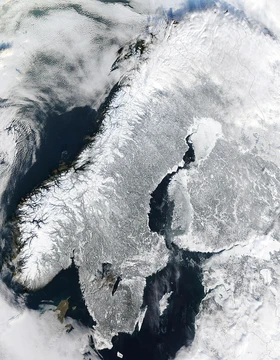
Begin with the basic definitions of peninsula versus cape, then explore the largest examples such as the Indian subcontinent and the Scandinavian Peninsula to build a sense of scale. From there, diving into storied capes like Cape Horn or Cape Canaveral gives concrete, memorable anchor points.
How are peninsulas and capes formed?
They typically arise from tectonic uplift, sea-level changes, coastal erosion, or glacial retreat carving out inlets. Over geological time, the interplay between rising land and advancing or receding seas sculpts these protruding shapes.
How many peninsulas and capes exist?
There is no single official count because the boundary between a 'peninsula' and a 'cape' is partly subjective and depends on scale and local naming conventions. Named peninsulas number in the hundreds, while capes number in the thousands around the world's coastlines.
What are some notable 'moments' tied to these landforms?
Bartolomeu Dias rounding the Cape of Good Hope in 1488 opened a sea route to Asia, and the 1958 rocket launch from Cape Canaveral marked a milestone in space exploration. The treacherous passage around Cape Horn has claimed countless ships, making it one of the most storied spots in maritime history.
Do peninsulas and capes matter beyond being scenic?
They influence ocean currents, create unique microclimates, and often serve as natural defensive positions or strategic shipping chokepoints. The surrounding water can also isolate and concentrate species, making many of them biodiversity hotspots.
Is there a 'canon' list of the biggest or most important ones?
By area, the Indian subcontinent, the Arabian Peninsula, and the Iberian Peninsula are routinely cited as the largest. For capes, prominence in navigation and history—Cape Horn, the Cape of Good Hope, Cape Chelyuskin as Asia's northernmost point—tends to define the greatest-hits list.